Web design for roofers

Most roofers have a website. Most of them aren't doing any work.

I build websites for roofers that bring in calls, not just visitors. One rebuild took a locksmith from about 1 in 10 people calling to nearly 1 in 3. Same business, same prices. Here's how, and what it'd take to do the same for you.

Book a free site breakdown →
15 minutes. No pitch, just what I'd actually fix.
1 in 10 → 1 in 3
People who called
~2×
Revenue
~2–3×
Calls per month
Who this is for

If your business runs on calls and jobs, not online checkout, this is built for you.

RoofersLocksmithsElectriciansPlumbers & HVACContractors+ any trade that runs on the phone ringing

Different trades, same problem: a website that looks fine and generates nothing. The fixes are almost always the same too.

Sound familiar?

If your site does any of this, you're losing calls right now.

The phone isn't ringing as much as it should, and you can't work out why

You're paying for ads or directory listings with no real idea if any of it's paying off

You're losing full roof jobs to outfits who aren't better than you, they just look more trustworthy online

You spend your time quoting work that was never going anywhere

The leads you do get are the wrong ones: out of your area, price-shopping, or patch repairs when you want replacements

You look like every other roofer in town, so people just go with whoever's cheapest

Why most websites don't bring in work

A good-looking website and a good website are not the same thing.

Picture two salesmen turning up at your door.

The first one's in a sharp suit. Looks the part, firm handshake. Then he opens his mouth and all you get is the company name, the phone number and a list of services. No proof, no stories, nothing that answers what you were actually wondering. He looks like a great salesman. He isn't one.

The second is dressed plain. You wouldn't pick him out of a crowd. But he shows you photos of jobs he's finished and tells you what those customers said afterwards. He answers your questions before you've finished asking them. If you're in a rush he gives you the quickest way to reach him, and if you're still weighing it up he gives you a slower one. By the time you're ready to talk money, he's already dealt with nearly everything.

Your website is one of those two men. Most are the first one.

Looks good
  • A modern layout and nice photos
  • States the name, phone number, services
  • That's about it
  • Doesn't bring in a single extra customer
Works well
  • Answers the questions people ask before they call
  • Shows proof: reviews, real jobs, who trusts you
  • Makes the next step effortless, on any device
  • Keeps bringing in customers, no matter what it looks like

Most agencies sell you the looks-good version. I build the one that works, and make it look good too.

How I work

I build the site like a diagnosis, not a template.

My job is to build websites that solve your biggest business problems and turn visitors into customers. Not to win design awards.

I'm Mansur. I build websites for trade businesses, and before I write a line of one, I look at who actually lands on it and why. Someone locked out right now, or with a burst pipe, wants a phone number, fast. Someone comparing three contractors for a bigger job has time to think it over.

A site built for only one of those visitors fails the rest.

I also look at what's already working for other businesses in the same trade, and what isn't, then build from there instead of starting from a template.

The result is a site that's doing a specific job on every section: building trust, showing the work, and making it easy to get in touch, whatever a visitor actually needs right now.

Every page should work like a salesperson who never clocks off: answering the questions, settling the doubts, and showing the proof, before the phone ever rings.
What you get

There's no standard package, because there's no standard problem.

The reason a website isn't bringing in work is different every time, and it's almost never one thing on its own.

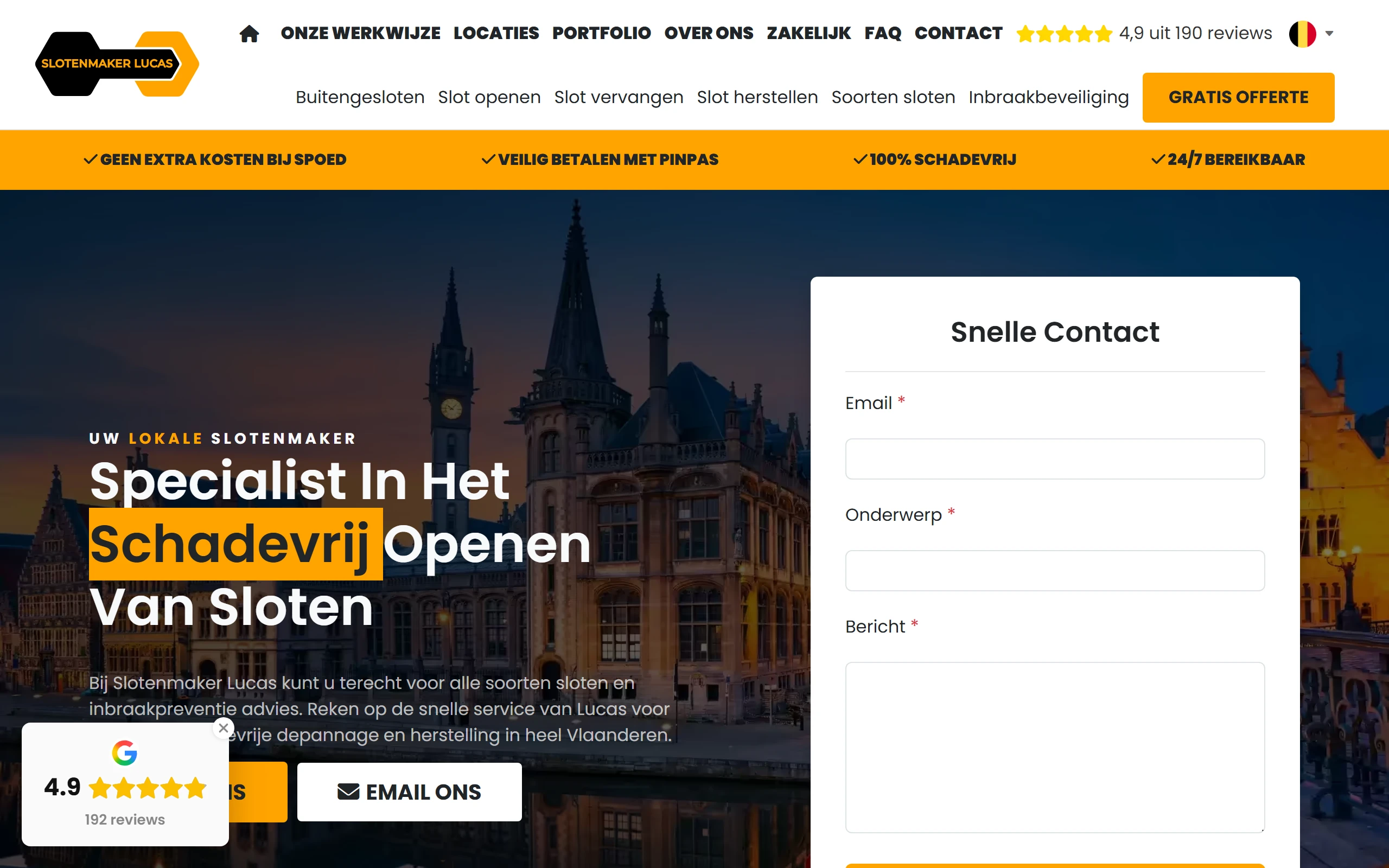
Lucas had five problems running at once. Nothing on his site gave a stranger a reason to trust him, even with 190+ reviews and jobs done for ALDI, the courts and the local police. The site spoke one language in a city where plenty of his customers don't. The contact form didn't send, so anyone who filled it in simply never heard back. It was slow and awkward on a phone, which is where nearly every call for a locksmith starts. And he had no way of telling which of his marketing was bringing work in and which was burning money.

Five problems, five specific fixes. Not one of them was making it look nicer. That's the part most people get wrong about what a website rebuild actually is.

It's also why I don't sell a package off the shelf. Be careful with anyone who quotes you one before they've looked at your site.

What a website can actually do for your business

More calls, and more of them turning into booked jobs

Fewer time-wasters, because price-shoppers and out-of-area calls get filtered out before they reach your phone

A reason to pick you over the other three outfits in town

Your reviews and your real jobs doing the convincing before anyone rings

Showing up when someone searches your trade and your town

The same five questions answered on the page, so your crew stops answering them all day

Customers who already know how you work, and roughly what it costs, before they call

Which of those you're missing is the whole point of the call. Sometimes the answer is a full rebuild. Sometimes it's a handful of changes that cost you a lot less.

You'll know which one you're looking at before you've paid me anything.

Case study — Slotenmaker Lucas

Here's what that actually looks like.

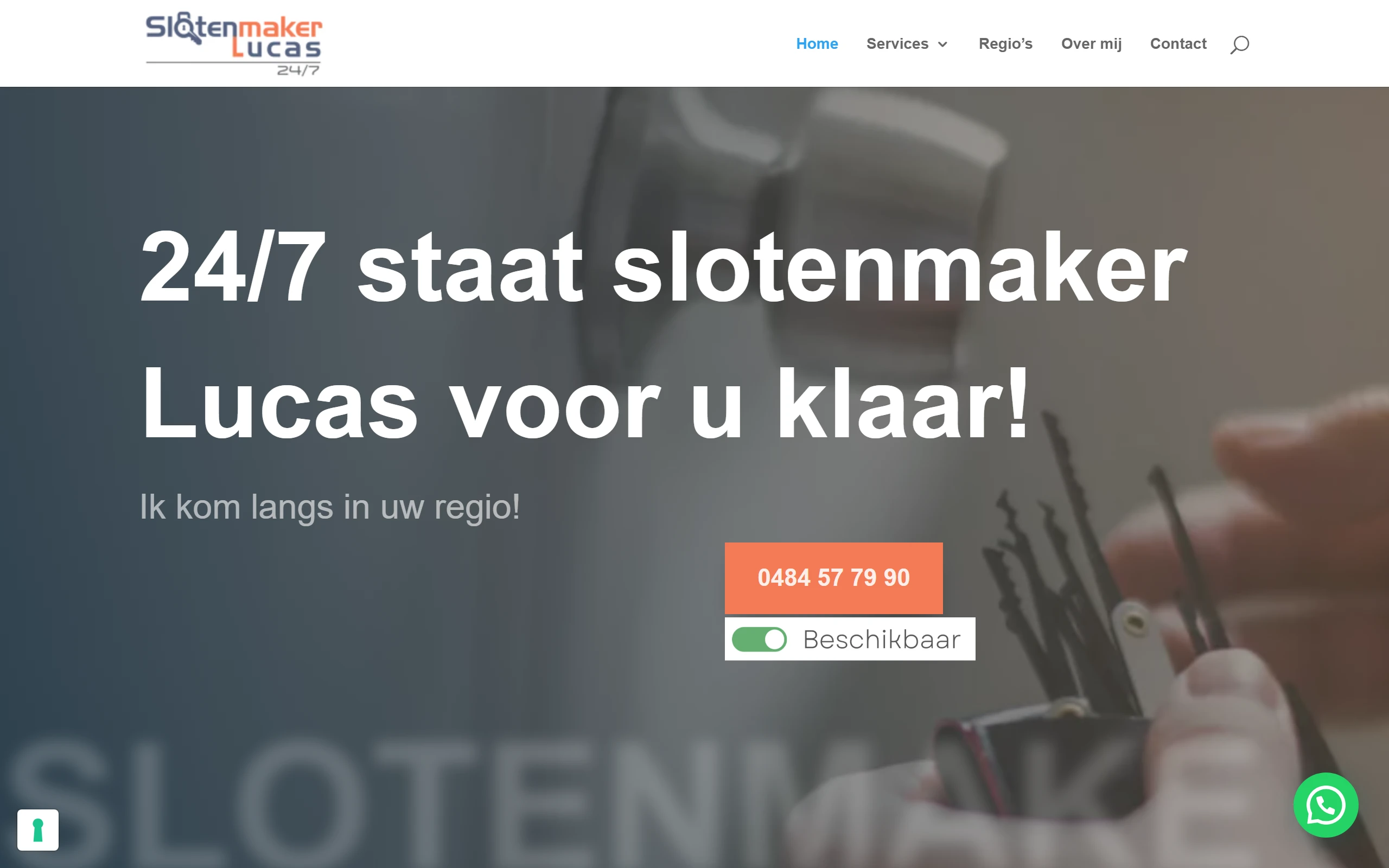
Lucas runs a locksmith business. Same business, same prices, same work, same guy doing the jobs. The website was the only thing that changed.

Both sites are still live. Go and look.

Revenue
~2× more
Calls & enquiries
~2–3× more
Visitors who picked up the phone
1 in 10 → nearly 1 in 3

"I figured the only way to get more customers was to spend more on ads, or bring in an SEO agency. I didn't expect just rebuilding the website to change how many people actually called, but it did. And the calls we get now are better: less time explaining the same thing over and over."

Lucas, owner
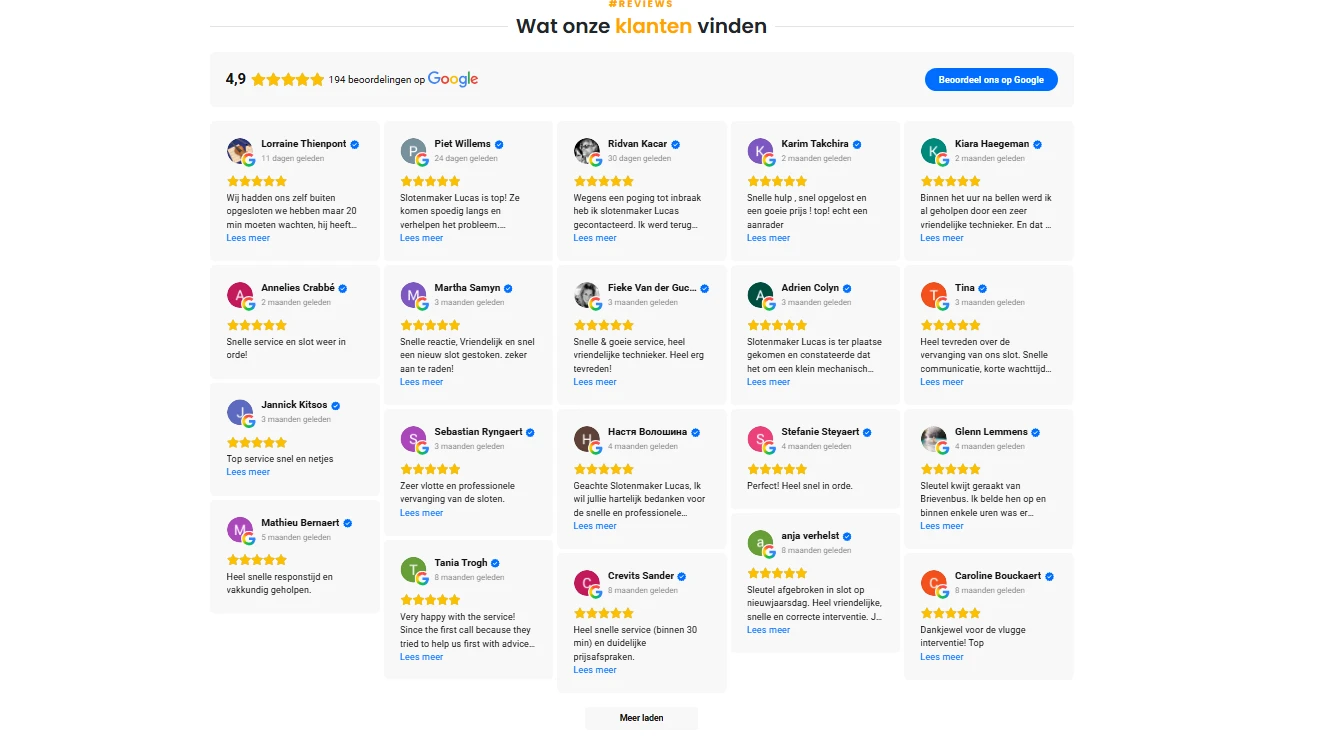
190+ Google reviews, 4.9 average, real names
Real Google reviews for Slotenmaker Lucas
Not ready to book?

Read the whole thing first.

The full Slotenmaker Lucas breakdown, nine pages of it. Every problem his old site had, what got changed, and what each change did to the number of calls he gets. Including the parts that are still a work in progress.

I'll email you the case study. Your address isn't sold or shared. See the privacy notice.

How this works

No mystery, no pressure.

01

Book a 15-minute call

I look at your current site live, on the call. Nothing to prepare on your end.

02

I show you what's actually costing you calls

Three to five specific, concrete things, the same kind of breakdown behind the numbers above.

03

You get a plan, or you get nothing

If it makes sense to work together, I send a fixed-price plan. If not, you keep the notes either way.

And if we end up working together
04

Discovery

I dig into your world first: what you sell, who buys it, what you keep losing work to. I can't fix a problem I haven't found.

05

Design

I build the thing around what I found, shaped to your business rather than dropped out of a template, and you see it before anything gets built.

06

Build

Once you're happy with how it looks, I build it properly: fast, secure, and working on the phone your customers actually use.

07

Launch

It goes live once you have signed off, and you get short videos showing how to change things yourself so you are not calling me to swap a phone number.

And who it isn't for

You're shopping purely on price. There's always someone cheaper, and sometimes cheaper is the right call.

You're already turning work away. Making the phone ring more isn't a favour if you can't answer it.

You just want it to look nicer. I'd take your money and you'd be disappointed.

Nobody's going to pick up. The best website in your trade can't save a business that doesn't answer.

Questions

Is the breakdown actually free?
Yes. It costs you fifteen minutes, nothing else.
How much of my time is this going to take?
Less than you're expecting, and I'd rather keep it that way. You know your customers better than I ever will, so I'll need some of your time early on to get that out of your head. After that the work is mine, not yours. If a rebuild starts adding jobs to your week, it's being run badly.
How much does a rebuild cost?
Depends on what's actually wrong. I'll give you a real number on the call based on what your site needs, not a generic package price.
I can get a website for a couple hundred bucks. Why would I pay more?
You can, and you'll get a website. Whether it brings you work is a separate question. Cheap usually means someone puts your name, your number and a list of services on a page and hands it over. That's the looks-good version further up. What you're paying me for is working out why people are calling someone else instead of you, and fixing that. A site that brings in two extra jobs a month pays for itself and keeps paying. One that brings in nothing was expensive at any price.
What if it doesn't work?
Fair question, and I'd be wary of anyone who answers it with a guarantee. What I can tell you is that you'll know exactly what I think is wrong and exactly what I'd change before you commit to anything, because that's what the free call is for. Nothing gets built on a hunch, and nothing gets touched that wasn't costing you work in the first place.
How do I know you'll actually deliver?
You don't, not from reading a website. That's most of the reason the first call is free and specific. Fifteen minutes is enough to tell whether I actually understand your business or I'm reading off a script. If I can't tell you something useful about your own site in that time, you've lost a quarter of an hour and learned what you needed to know about me.
How long does it take?
Between one and three weeks, depending on how big the job is and how much has to be built rather than fixed. You get a date before we start, and I hold it.
Do I have to pay it all upfront?
No. Half to start, half when it's finished and you're happy with it. So you're never out of pocket for work that hasn't been done, and I'm never finishing a job I won't get paid for. That's the whole arrangement, no retainer and no surprise invoices.
What happens after it goes live?
I keep it secure and updated, and you get short videos showing how to change your own text and photos, so you're not paying me to swap a phone number. Anything bigger is charged by the hour, agreed before I touch anything.
Do I get to see it before it goes live?
Yes. You see the design before anything gets built, and the finished site before it goes public. Small tweaks at that stage are fine. Rewriting half the site isn't, which is why the first stage matters.
The example is a locksmith. Does this apply to my trade?
Yes. That locksmith is one case study, not the whole offer. The same problems turn up in every trade: people land on the site and see no reason to trust you, it drags on a phone, and you have no idea which jobs came from where. Contractors, electricians, roofers, logistics, same story.
Rather write than talk?

Send me a message instead.

Some people would rather put it in writing, and that's fine. Tell me as much as you can about the business and what's not working. The more detail, the more useful my reply.

I read every one myself and reply within a working day. If it's urgent, ring instead.

Want the same breakdown for your business?

Fifteen minutes, no obligation. If there's nothing worth fixing, I'll tell you that too.

No pitch, just what I'd actually fix.

Not ready for a call? Read the full case study first →

Book a free site breakdown →